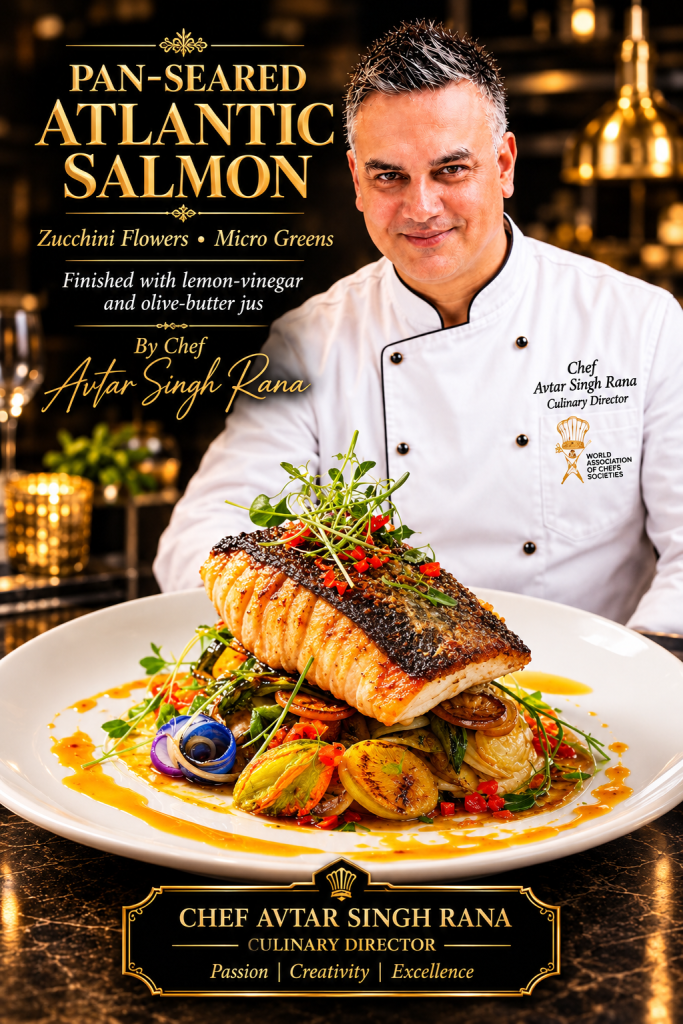
Pan seared Atlantic Salmon πŸ˜˜πŸ˜‹πŸ₯°πŸ‘


Pan-Seared Atlantic Salmon with Zucchini Flowers & Lemon-Vinegar Olive-Butter Jus

Signature fine-dining recipe by Culinary Director Chef Avtar Singh Rana

A refined contemporary dish featuring crispy-skinned Atlantic salmon, delicate zucchini flowers, sautΓ©ed seasonal vegetables, fresh microgreens, and a glossy lemon-vinegar olive-butter jus.

Yield

2 portions

Total time

35 minutes

1. Ingredients

Salmon

2 Atlantic salmon fillets, 6–7 oz (170–200 g) each, skin on

1 tbsp olive oil

1 tbsp unsalted butter

1 garlic clove, lightly crushed

2 sprigs fresh thyme

Salt and freshly cracked black pepper

Zucchini flowers and vegetables

4–6 fresh zucchini flowers, cleaned carefully

1 small zucchini, sliced

6 baby potatoes, halved and roasted

Β½ cup asparagus or seasonal greens

1 tbsp olive oil

Salt and pepper, to taste

Microgreens and edible flowers for garnish

Lemon-vinegar olive-butter jus

2 tbsp extra-virgin olive oil

1 small shallot, finely minced

ΒΌ cup dry white wine or vegetable stock

1 tbsp white wine vinegar

2 tbsp fresh lemon juice

ΒΌ cup fish stock or light vegetable stock

3 tbsp cold unsalted butter, cubed

1 tsp lemon zest

1 tsp chopped chives or parsley

Salt and white pepper, to taste

2. Preparation and cooking

Step 1 β€” Prepare the salmon

Pat the salmon completely dry, especially the skin. Season both sides with salt and pepper. Let stand for 5–10 minutes while preparing the vegetables.

Step 2 β€” Pan-sear

Heat olive oil in a heavy skillet over medium-high heat. Place the salmon skin-side down and press gently for the first 20 seconds. Cook for 4–6 minutes until the skin is crisp. Turn, add butter, garlic and thyme, and baste for another 2–4 minutes, depending on thickness. Cook to 145Β°F (63Β°C) internally for food safety.

Step 3 β€” Prepare the garnish

Roast the halved potatoes at 400Β°F (205Β°C) until golden and tender. SautΓ© zucchini and asparagus in olive oil with light seasoning. Briefly sautΓ© zucchini flowers for 30–60 seconds per side until just tender, handling them gently.

Step 4 β€” Make the lemon-vinegar olive-butter jus

Sweat the shallot in a little olive oil over medium heat. Add white wine or stock and vinegar; reduce by about half. Add lemon juice and fish stock, then simmer until lightly concentrated. Lower the heat and whisk in cold butter a few cubes at a time until glossy. Finish with lemon zest, herbs, salt and white pepper. Do not boil after adding butter.

3. Fine-dining plating

Spoon a small pool of warm lemon-vinegar olive-butter jus onto a warm white plate.

Arrange the roasted baby potatoes and sautΓ©ed vegetables in the center.

Place the salmon on top at a slight angle, keeping the crisp skin exposed.

Position the zucchini flowers delicately beside the fish.

Spoon a little extra jus around the plate, not over the crispy skin.

Finish with microgreens, lemon zest and edible flowers.

Chef Avtar’s signature finishing touch

The secret is balancing buttery richness, fresh citrus acidity and the crisp texture of the salmon skin. Keep the jus glossy and light, and add the microgreens immediately before serving.

Menu description: Pan-Seared Atlantic Salmon | Zucchini Blossoms | Roasted Baby Potatoes | Seasonal Greens | Lemon-Vinegar Olive-Butter Jus.

Service recommendation: Serve immediately while the salmon skin remains crisp and the sauce is warm and emulsified.
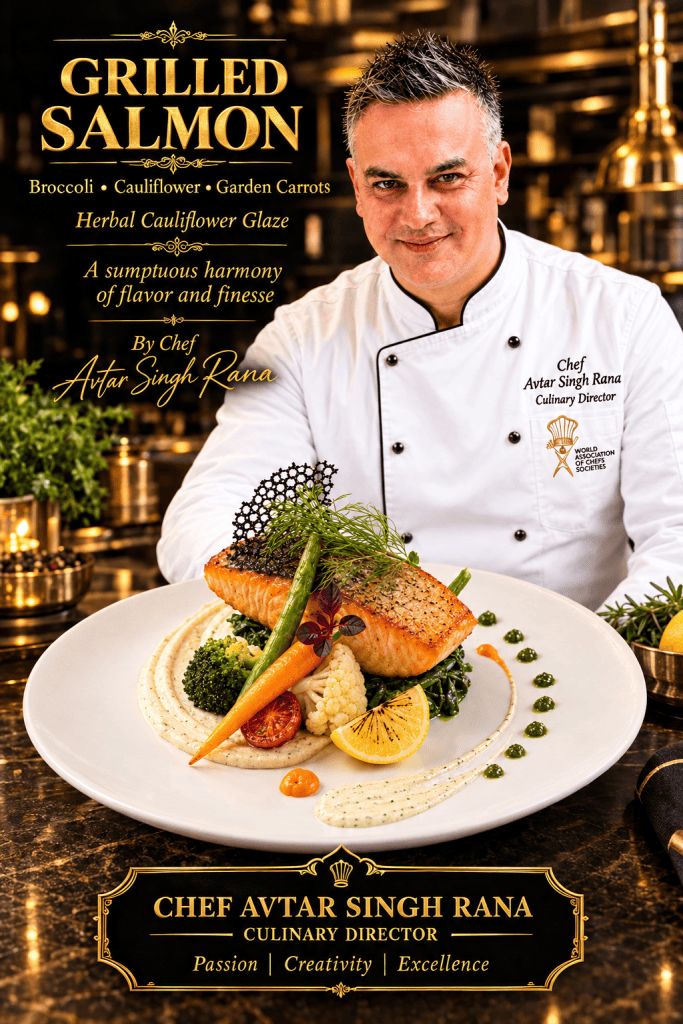
Grilled Salmon with herbal Cauliflower glaze πŸ₯°πŸ˜‹πŸ˜˜πŸ₯‚


Grilled Salmon with Herbal Cauliflower Glaze

By Culinary Director Chef Avtar Singh Rana | Fine-Dining Recipe

A beautifully seared salmon fillet served with broccoli, cauliflower, glazed garden carrots, silky herb-infused cauliflower purΓ©e, and a delicate herbal glaze. This dish balances rich salmon, fresh vegetables, and bright citrus notes.

Ingredients

1. Grilled salmon

2 salmon fillets, 6–7 oz (170–200 g) each

1 tbsp olive oil

1 tsp lemon juice

1 tsp chopped fresh dill

Salt and freshly cracked black pepper

1 tsp butter

2. Vegetables

1 cup broccoli florets

1 cup cauliflower florets

6 baby carrots

1 tbsp butter

Salt and black pepper

Β½ tsp honey

3. Herbal cauliflower glaze / purΓ©e

2 cups cauliflower florets

ΒΌ cup heavy cream

1 tbsp butter

Β½ tsp minced garlic

1 tsp fresh thyme

1 tsp chopped parsley

1–2 tsp lemon juice

Salt and white pepper

A little vegetable stock, as needed

Method

Step 1 β€” Season the salmon

Pat the fillets dry. Season with salt, pepper, olive oil, lemon juice, and dill. Rest for 10 minutes.

Step 2 β€” Grill or sear

Heat a skillet or grill to medium-high. Cook skin-side down for 4–6 minutes, then turn and cook another 2–4 minutes, depending on thickness. Add butter near the end. For food safety, cook to 145Β°F (63Β°C) internally.

Step 3 β€” Prepare the vegetables

Blanch broccoli and cauliflower in salted boiling water until tender-crisp. SautΓ© carrots in butter with honey, a splash of water, salt, and pepper until glossy and tender.

Step 4 β€” Make the herbal cauliflower purΓ©e

Simmer cauliflower until completely tender. Drain well and blend with cream, butter, garlic, thyme, parsley, lemon juice, and seasoning. Add stock gradually until silky and smooth.

Step 5 β€” Finish the herbal glaze

For a pourable glaze, loosen a portion of the purΓ©e with warm vegetable stock. Whisk in a little butter, chopped herbs, and lemon juice. Adjust the consistency to coat the back of a spoon.

Fine-dining plating

Swipe the cauliflower purΓ©e across a warm white plate.

Position the grilled salmon at a slight angle, with the seared surface facing up.

Arrange broccoli florets, cauliflower, and glazed baby carrots alongside.

Add small dots or a delicate drizzle of herbal glaze.

Garnish with dill fronds, microgreens, and a charred lemon wedge.

Chef Avtar’s signature touch: Finish with lemon-herb butter and freshly chopped dill just before service. Keep the glaze delicate so it enhances, rather than overwhelms, the natural flavor of the salmon.

Yield: 2 portions

Preparation: 20 minutes

Cooking: 20–25 minutes

Style: Contemporary international fine dining.

Peking Duck πŸ˜˜πŸ‘πŸ˜‹πŸ₯‚


Peking Duck β€” Classic Chinese Signature Recipe

By Chef Avtar Singh Rana | Executive Chef & Culinary Director

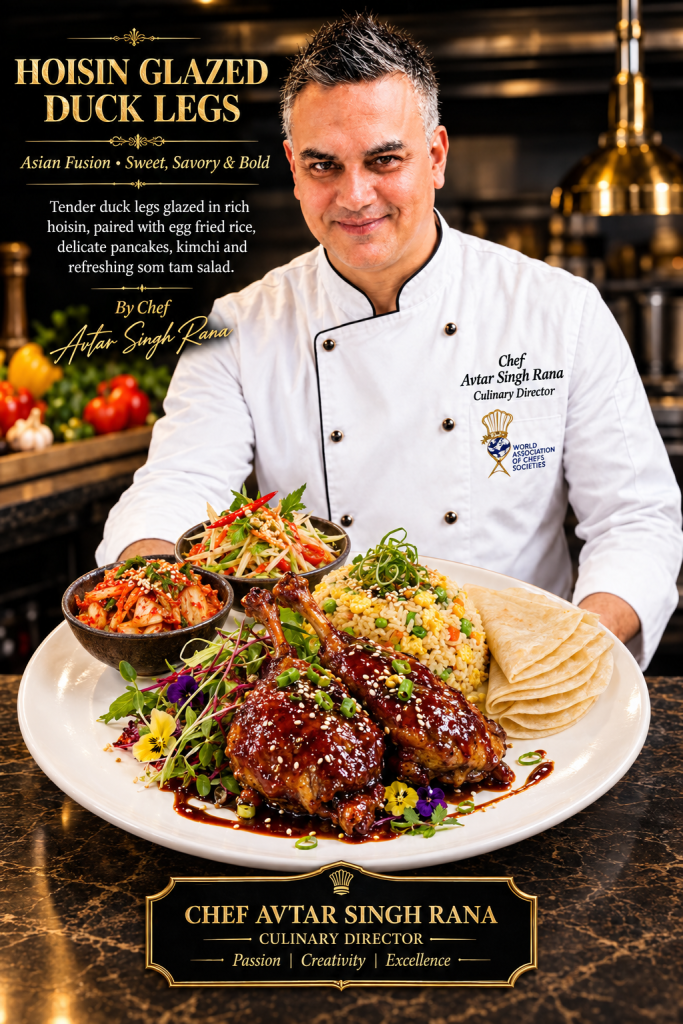
Peking duck is a celebrated Beijing specialty known for its lacquered, crispy skin, succulent meat, thin pancakes, sweet hoisin sauce, cucumber, and spring onions. The secret is drying the skin thoroughly before roasting.

1. Ingredients

For the duck

1 whole duck, 2–2.5 kg (4.5–5.5 lb)

2 tsp salt

1 tsp five-spice powder

1 tsp white pepper

1 tbsp ginger, sliced

2 spring onions

2 tbsp maltose or honey

2 tbsp rice vinegar

1 tbsp light soy sauce

1 cup boiling water for blanching

For serving

Mandarin pancakes or thin Chinese pancakes

Hoisin sauce

Cucumber, cut into fine batons

Spring onions, julienned

Optional: a little sesame oil for the sauce

2. Preparation method

Step 1 β€” Prepare the duck

Remove giblets and excess fat. Pat dry thoroughly. Carefully loosen the skin from the breast where possible without tearing it. Season the cavity with salt, five-spice powder, white pepper, ginger, and spring onions.

Step 2 β€” Blanch and glaze

Carefully pour boiling water over the duck skin to tighten it. Mix maltose or honey with rice vinegar and light soy sauce. Brush a thin, even layer over the skin.

Step 3 β€” Air-dry

Place the duck on a rack over a tray, uncovered, in the refrigerator for 12–24 hours. This is the key step for crisp skin. Keep it refrigerated at 40Β°F (4Β°C) or below.

Step 4 β€” Roast

Preheat oven to 425Β°F (220Β°C).

Roast breast-side up on a rack for 20 minutes.

Reduce to 350Β°F (175Β°C) and continue roasting, approximately 60–90 minutes depending on the duck’s size and oven.

Check doneness with a thermometer. The thickest breast and thigh portions should reach at least 165Β°F (74Β°C). Rest for 10–15 minutes before carving.

Step 5 β€” Carve and serve

Traditionally, the crispy skin is sliced carefully, followed by thin slices of duck meat. Arrange neatly on a warm platter with pancakes, hoisin sauce, cucumber, and spring onions.

3. Quick hoisin dipping sauce

Mix together:

4 tbsp hoisin sauce

1 tsp light soy sauce

1 tsp rice vinegar

1 tsp honey, if desired

1–2 tsp water to adjust consistency

Stir until smooth and glossy.

4. Professional plating β€” Chef Avtar’s presentation

Fan the duck slices in overlapping rows, with the crispy skin facing upward.

Place pancakes in a covered bamboo steamer.

Present hoisin in a small sauce dish, with cucumber and spring onions arranged separately.

For tableside service, carve the duck in front of guests and demonstrate how to assemble the pancakes.

Chef’s tip: The most important factors are a dry skin surface, a thin glaze, good airflow around the duck, and careful carving. Excessive glaze can make the skin sticky rather than crisp.

Traditional service: Wrap a slice of duck with hoisin, cucumber, and spring onion in a warm pancake. Fold, enjoy, and repeat!

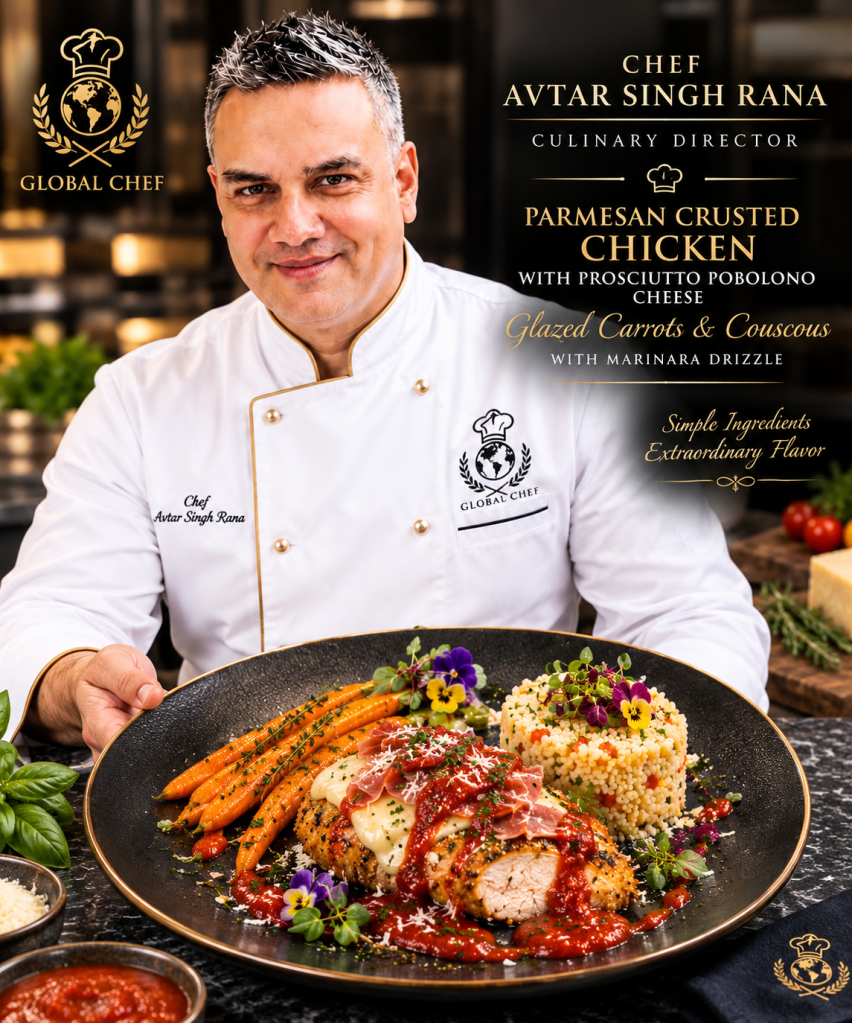
Parmesan crusted Chicken with Marinara sauceπŸ˜‹πŸ˜˜


Chef Avtar Singh Rana’s Parmesan-Crusted Chicken

Global Chef Signature Recipe β€’ Fine Dining β€’ Serves 4

A gourmet Italian-American inspired dish combining golden Parmesan-crusted chicken, savory prosciutto, melted provolone cheese, honey-glazed carrots, fluffy couscous, and a vibrant marinara drizzle.

Ingredients

1. Parmesan-crusted chicken

4 boneless chicken breasts (6–7 oz each)

Β½ cup grated Parmesan cheese

ΒΎ cup panko breadcrumbs

Β½ cup all-purpose flour

2 eggs, beaten

1 tsp garlic powder

1 tsp Italian seasoning

Salt and black pepper

2–3 tbsp olive oil

4 slices prosciutto

4 slices provolone cheese

2. Marinara sauce

2 cups crushed tomatoes

2 cloves garlic, minced

1 tbsp olive oil

1 tbsp chopped fresh basil

Β½ tsp dried oregano

Salt, pepper and a pinch of sugar, as needed

3. Honey-glazed carrots

12–16 baby carrots

1 tbsp butter

1 tbsp honey

ΒΌ cup vegetable stock or water

Salt, pepper and fresh thyme

4. Vegetable couscous

1 cup couscous

1 cup hot vegetable or chicken stock, adjusted to package directions

2 tbsp diced bell peppers

2 tbsp diced carrots

1 tbsp olive oil

1 tbsp chopped parsley

Salt, pepper and lemon zest

Method of preparation

Step 1 β€” Crust the chicken

Flatten the chicken breasts evenly to about ΒΎ inch thick.

Season with salt, pepper, garlic powder and Italian seasoning.

Prepare three bowls: flour, beaten eggs, and a mixture of panko and Parmesan.

Coat each breast in flour, egg and Parmesan breadcrumbs, pressing gently to adhere.

Step 2 β€” Sear and bake

Heat olive oil in an oven-safe skillet. Sear chicken for approximately 3–4 minutes per side until golden. Transfer to a 375Β°F (190Β°C) oven and cook until almost done.

Step 3 β€” Add prosciutto and provolone

Place one slice of prosciutto over each breast, followed by provolone cheese. Return to the oven until the cheese melts and the chicken reaches 165Β°F (74Β°C) internally.

Step 4 β€” Prepare the marinara

SautΓ© garlic in olive oil. Add crushed tomatoes, oregano, salt and pepper. Simmer for 15–20 minutes, then finish with fresh basil. Blend if you prefer a smooth sauce.

Step 5 β€” Prepare the sides

Carrots: Simmer in stock until tender. Add butter and honey, then glaze until glossy.

Couscous: Pour hot stock over couscous according to the package instructions. Cover, rest, fluff with a fork, then fold in sautΓ©ed diced vegetables, parsley, olive oil and lemon zest.

Fine-dining plating by Chef Avtar

Place a neat ring-molded portion of vegetable couscous on a warm black plate.

Arrange the Parmesan-crusted chicken slightly off-center, keeping the melted provolone and prosciutto visible.

Position the glazed carrots in a clean fan or parallel arrangement.

Drizzle marinara in a sweeping curve around the chicken rather than covering the crisp crust.

Finish with finely grated Parmesan, fresh basil, microgreens and a few edible flowers.

Chef’s signature touch: Add a little lemon zest to the couscous for freshness, and keep the marinara bright and slightly tangy to balance the salty prosciutto and rich provolone.

Menu description: Golden Parmesan-crusted chicken layered with savory prosciutto and melted provolone, served with honey-glazed carrots, garden vegetable couscous and a vibrant basil marinara drizzle.

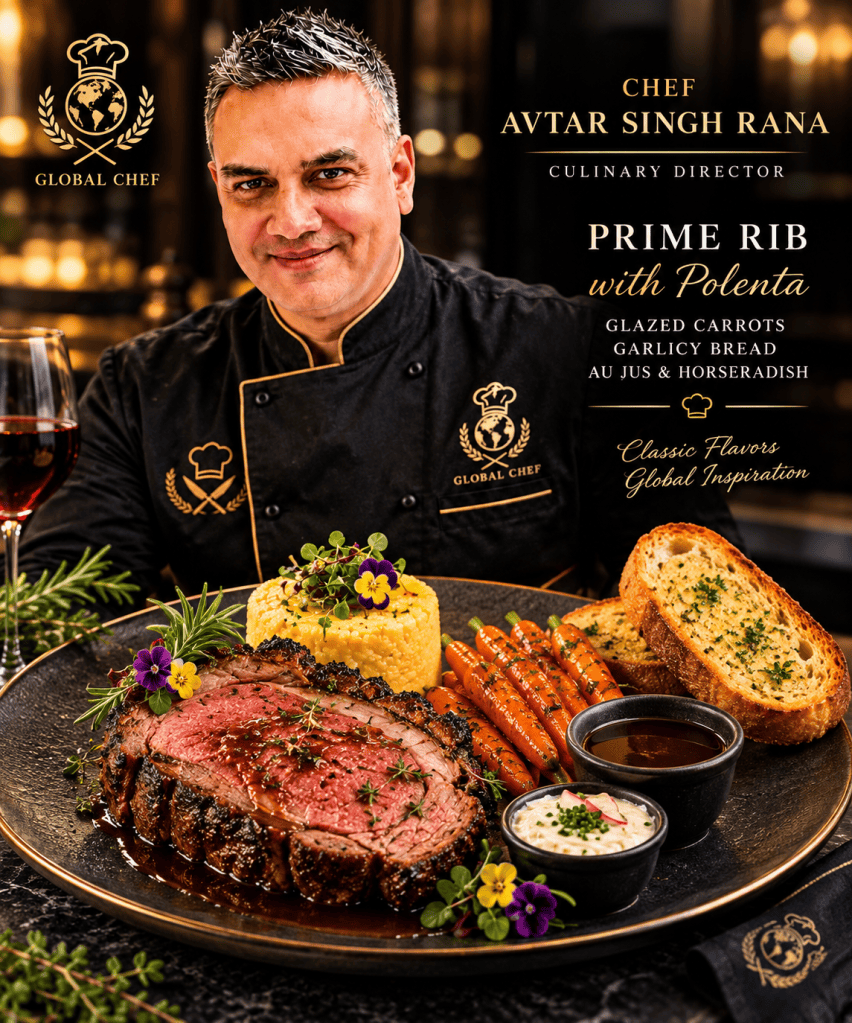
Prime Rib with Creamy Polenta πŸ˜‹πŸ˜˜πŸ₯°πŸ₯‚


Chef Avtar Singh Rana’s Prime Rib with Creamy Polenta

Global Chef Signature Recipe β€’ Fine Dining β€’ Serves 4

A classic American steakhouse dish featuring herb-crusted prime rib, silky Parmesan polenta, honey-glazed carrots, garlic bread, rich beef au jus, and creamy horseradish sauce.

Ingredients

1. Herb-crusted prime rib

2–2.5 lb (900 g–1.1 kg) boneless prime rib roast

2 tbsp olive oil

1 tbsp Dijon mustard

1 tbsp minced garlic

1 tsp fresh rosemary, chopped

1 tsp fresh thyme, chopped

1 tsp kosher salt, or to taste

1 tsp cracked black pepper

1 tsp smoked paprika (optional)

2. Creamy Parmesan polenta

1 cup coarse cornmeal or polenta

4 cups chicken or vegetable stock

Β½ cup heavy cream

2 tbsp butter

Β½ cup grated Parmesan cheese

Salt and white pepper, to taste

3. Honey-glazed carrots

12 baby carrots, peeled

1 tbsp butter

1 tbsp honey

ΒΌ cup vegetable stock or water

Salt and freshly ground pepper

Fresh thyme, for garnish

4. Garlicky bread

4 slices artisan baguette

2 tbsp softened butter

2 cloves garlic, minced

1 tbsp chopped parsley

5. Beef au jus

1 cup beef stock

Β½ cup beef drippings, if available

1 tsp Worcestershire sauce

1 tsp minced shallot

Β½ tsp fresh thyme

Black pepper, to taste

6. Horseradish cream

Β½ cup sour cream

1–2 tbsp prepared horseradish

1 tsp lemon juice

Salt and black pepper, to taste

Method of preparation

Step 1 β€” Prepare and roast the beef

Bring the roast toward room temperature for about 30–45 minutes.

Mix olive oil, Dijon mustard, garlic, rosemary, thyme, salt, pepper, and paprika.

Rub evenly over the beef.

Roast in a preheated oven at 450Β°F (232Β°C) for 15 minutes, then reduce to 325Β°F (163Β°C) until the desired internal temperature is reached.

Rest for 20–30 minutes before slicing.

Temperature guide: remove at approximately 120–125Β°F for medium-rare, allowing for carryover cooking. Verify with a thermometer; USDA guidance for whole beef roasts is 145Β°F with a 3-minute rest.

Step 2 β€” Make the polenta

Bring stock to a gentle boil.

Slowly whisk in the polenta to prevent lumps.

Simmer gently, stirring frequently, for 25–40 minutes or according to the package instructions.

Stir in cream, butter, and Parmesan.

Adjust seasoning and consistency. The polenta should be creamy and smooth.

Step 3 β€” Glaze the carrots

Blanch carrots in salted boiling water until just tender.

Drain, then sautΓ© in butter.

Add honey and stock.

Toss until shiny and lightly caramelized. Season and finish with fresh thyme.

Step 4 β€” Prepare the garlic bread

Mix butter, garlic, and parsley. Spread on the baguette slices and bake at 400Β°F (204Β°C) for 6–8 minutes until golden and crisp.

Step 5 β€” Finish the sauces

For the au jus, sautΓ© shallot briefly in the beef drippings, add stock, Worcestershire sauce, and thyme, then simmer until flavorful. Strain and season.

For the horseradish cream, mix sour cream, horseradish, lemon juice, salt, and pepper. Chill until serving.

Enjoy the fabulous weekend special with chef Avtar Singh Rana.

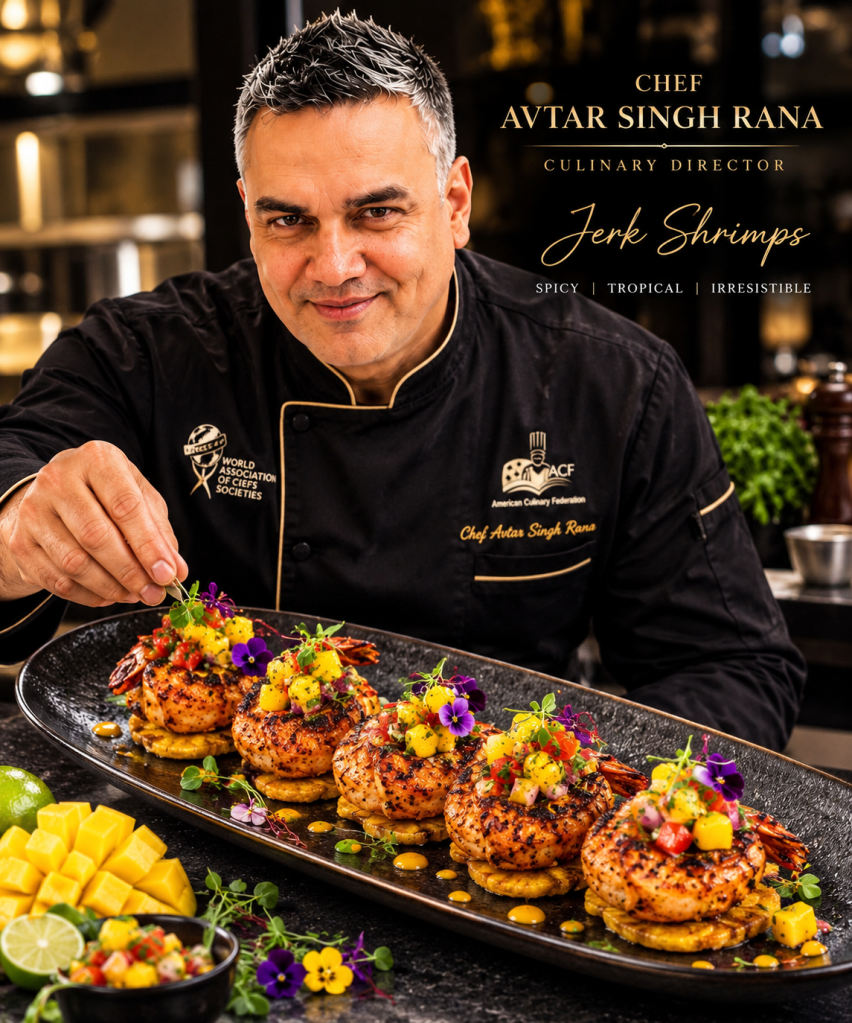
Jerk Shrimps with Mango SalsaπŸ˜‹πŸ˜πŸ₯°πŸ˜˜


Chef Avtar Singh Rana’s Jerk Shrimp with Mango Salsa

Caribbean-inspired fusion β€’ Premium appetizer β€’ Restaurant-style plating

Smoky, spicy jerk-marinated shrimp served on crispy plantain slices, topped with fresh mango salsa, micro herbs, edible flowers, and a vibrant tropical glaze.

Ingredients

1. Jerk shrimp β€” serves 4

1 lb (450 g) jumbo shrimp, peeled and deveined

1 tbsp olive oil

1 tbsp lime juice

1 tsp garlic, minced

1 tsp fresh ginger, minced

1 tsp paprika

1 tsp ground allspice

Β½ tsp dried thyme

Β½ tsp onion powder

Β½ tsp brown sugar

¼–½ tsp cayenne pepper, to taste

Salt and black pepper

2. Fresh mango salsa

1 cup ripe mango, finely diced

ΒΌ cup red bell pepper, finely diced

2 tbsp red onion, finely diced

1 tbsp fresh cilantro, chopped

1 tbsp lime juice

1 tsp honey, optional

Salt and a pinch of chili flakes

3. Plantain base and garnish

2 ripe but firm plantains

1 tbsp oil

Microgreens

Food-safe edible flowers

Lime wedges

Mango purΓ©e or chili-lime glaze, optional

Method

Step 1 β€” Marinate the shrimp

Mix olive oil, lime juice, garlic, ginger, spices, brown sugar, salt, and pepper. Coat the shrimp and refrigerate for 20–30 minutes.

Step 2 β€” Prepare the plantains

Slice diagonally into Β½-inch pieces. Brush with oil and grill or pan-sear for 2–3 minutes per side until golden and tender.

Step 3 β€” Grill the shrimp

Grill over medium-high heat for approximately 2–3 minutes per side, depending on size, until opaque and cooked through. Shrimp should reach 145Β°F (63Β°C).

Step 4 β€” Make the salsa

Gently combine mango, bell pepper, red onion, cilantro, lime juice, and seasoning. Keep chilled until plating.

Premium plating β€” Chef Avtar’s signature presentation

Arrange the golden plantain slices in a straight line along a long matte-black platter.

Place one grilled jerk shrimp on each plantain, keeping the spacing uniform.

Spoon a small, neat mound of mango salsa over each shrimp.

Add delicate microgreens and small edible flowers for color and height.

Finish with mango-chili glaze, a few lime droplets, and restrained sauce accents around the row.

Chef’s tip: Balance the smoky heat of the jerk seasoning with sweet mango, fresh lime, and caramelized plantain. Keep the garnish light so the grilled shrimp remains the star.

Suggested menu description: Caribbean Jerk Shrimp β€” flame-grilled jumbo shrimp, caramelized plantain, tropical mango salsa, lime-chili glaze, micro herbs and edible flowers.

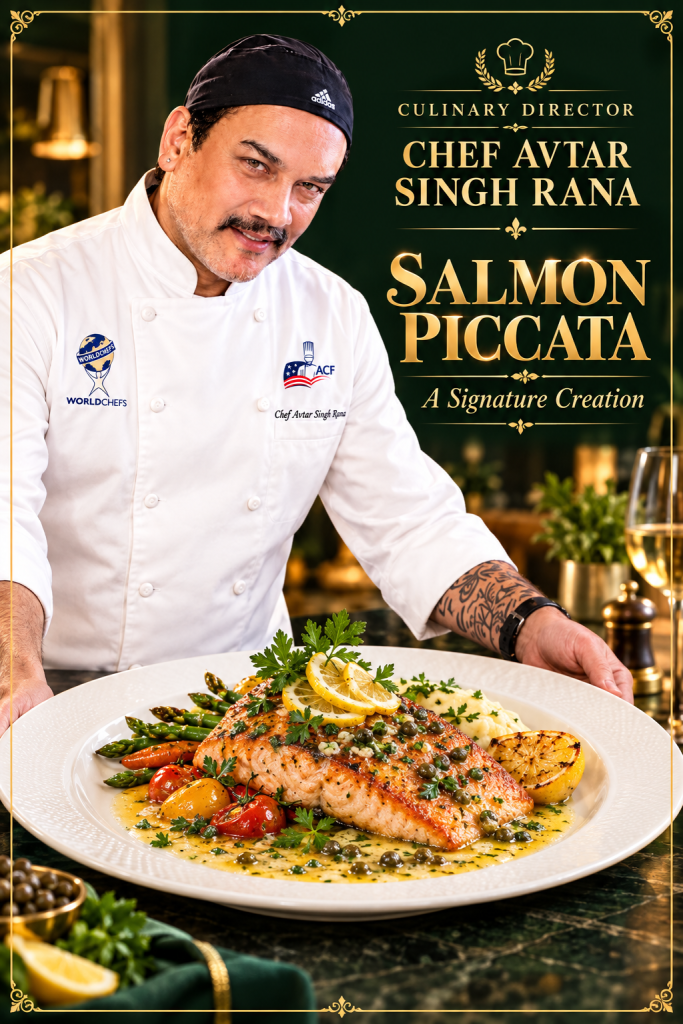
Salmon Piccata πŸ˜˜πŸ˜‹


Chef Avtar Singh Rana’s Salmon Piccata

A classic Italian-inspired dish featuring pan-seared salmon, a bright lemon-butter sauce, briny capers, fresh parsley, and a touch of white wine. Perfect for an elegant restaurant entrΓ©e or a fine-dining cooking class.

25 min, total time

2 servings

Ingredients

For the salmon

2 salmon fillets, 6–8 oz (170–225 g) each

Salt and freshly ground black pepper, to taste

2 tbsp all-purpose flour, for a light coating (optional)

1 tbsp olive oil

1 tbsp butter

For the piccata sauce

2 tbsp butter, chilled and cubed

2 garlic cloves, finely minced

ΒΌ cup dry white wine

Β½ cup seafood stock or chicken stock

2 tbsp fresh lemon juice

1–2 tbsp capers, drained

1 tsp lemon zest

1 tbsp chopped fresh parsley

Salt and black pepper, to taste

Garnish and accompaniments

Lemon slices

Steamed asparagus or broccolini

Creamy mashed potatoes or angel-hair pasta

Fresh parsley and microgreens, optional

Method

1. Prepare the salmon

Pat the fillets dry. Season both sides with salt and pepper. Lightly dust with flour if you prefer a delicate golden crust, shaking off any excess.

2. Sear the salmon

Heat olive oil and 1 tbsp butter in a skillet over medium-high heat. Sear the salmon for approximately 3–4 minutes per side, depending on thickness. Remove and keep warm. Cook to an internal temperature of 145Β°F (63Β°C).

3. Build the piccata sauce

Reduce heat to medium. Add garlic and sautΓ© for 20–30 seconds. Deglaze with white wine, scraping up the browned bits. Reduce by half, then add stock, lemon juice, zest, and capers. Simmer for 2–3 minutes.

4. Finish the sauce

Lower the heat and whisk in the chilled butter gradually until the sauce is glossy and lightly emulsified. Add parsley and adjust seasoning. Avoid boiling after adding the butter.

5. Plate and serve

Place mashed potatoes or pasta on a warm plate. Position the salmon at an angle, spoon the lemon-caper butter sauce around and over it, and garnish with lemon slices, parsley, and seasonal greens.

Chef Avtar’s professional tips

For crisp skin: Dry the skin thoroughly and place it skin-side down in a hot pan first. Press gently for the first 20 seconds.

For balanced flavor: Start with less lemon juice and adjust at the end. The sauce should be bright, buttery, and savory rather than sharply acidic.

For a restaurant finish: Add a small splash of stock if the sauce becomes too thick.

For a lighter version: Replace some butter with olive oil and use extra stock.

For elegant plating: Use a swoosh of potato purΓ©e, arrange asparagus neatly, and finish with capers, lemon zest, and microgreens.

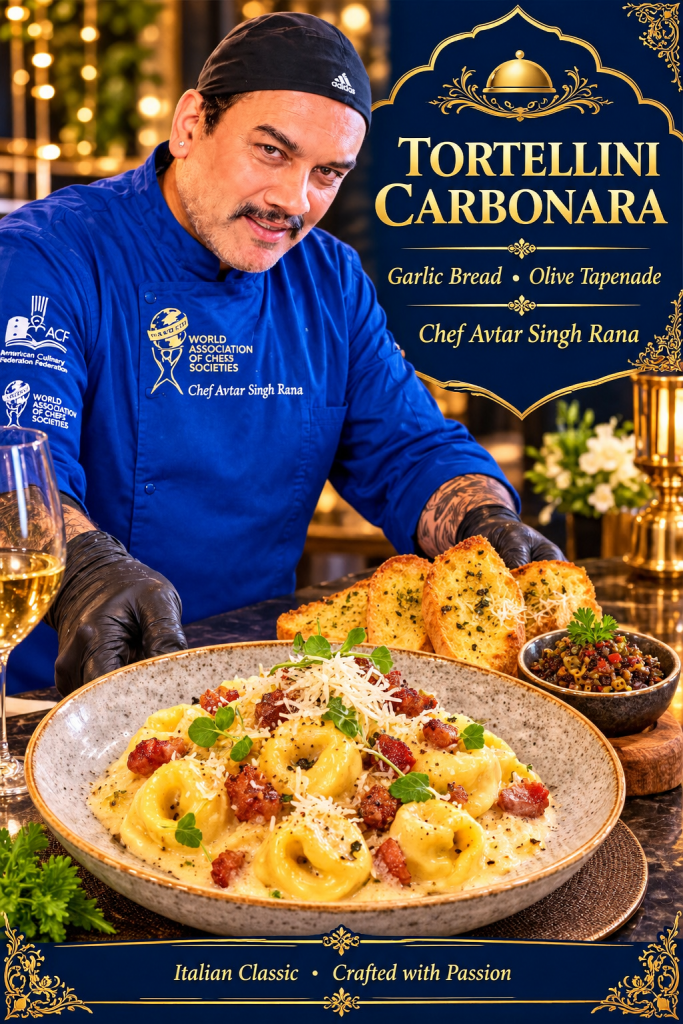
Tortellini Carbonara 😘😍πŸ₯°πŸ˜‹


Chef Avtar Singh Rana’s Tortellini Carbonara

Italian Classic β€’ Garlic Bread β€’ Olive Tapenade

A luxurious Italian-inspired dish featuring tender cheese-filled tortellini coated in a silky Parmesan and egg sauce, finished with crispy pancetta, cracked black pepper, and fresh herbs.

30 min, Total time, Servings 4

1. Ingredients

Tortellini carbonara

500 g fresh cheese tortellini

150 g pancetta or bacon, diced

3 large egg yolks

1 whole egg

100 g finely grated Parmesan or Pecorino Romano

1 small garlic clove, optional

1 tsp freshly cracked black pepper

100–150 ml reserved pasta water, as needed

Salt, to taste

1 tbsp chopped parsley or chives, optional

Chef’s note: Traditional carbonara uses eggs, hard cheese, cured pork and black pepper. Cream is not necessary; the egg and cheese create the silky sauce.

2. Garlic bread

1 small baguette or 8 slices rustic bread

60 g softened butter

3 garlic cloves, minced

1 tbsp chopped parsley

1 tbsp olive oil

20 g grated Parmesan, optional

3. Olive tapenade

150 g pitted Kalamata or mixed olives

1 tbsp capers, rinsed

1 small garlic clove

1 tbsp lemon juice

2 tbsp extra-virgin olive oil

1 tsp chopped parsley

Black pepper, to taste

2. Method

Step 1 β€” Cook the tortellini

Bring salted water to a boil. Cook tortellini according to package directions until tender but firm. Reserve a cup of pasta water, then drain.

Step 2 β€” Crisp the pancetta

Place pancetta in a skillet over medium heat. Cook until golden and crisp. Add optional garlic for the final 30 seconds. Keep a little rendered fat in the pan.

Step 3 β€” Prepare the carbonara base

Whisk egg yolks, whole egg, grated cheese and black pepper in a bowl until thick. Add a spoonful of warm pasta water gradually to loosen the mixture.

Step 4 β€” Create the silky sauce

Toss the drained tortellini with pancetta and its fat. Remove the pan from direct heat. Add the egg-cheese mixture and toss continuously, adding pasta water a little at a time until glossy and creamy.

Important: Do not boil the sauce after adding eggs, or they may scramble.

Step 5 β€” Prepare garlic bread

Mix butter, garlic, parsley and olive oil. Spread over bread and toast at 400Β°F (205Β°C) for 6–10 minutes until golden. Add Parmesan if desired.

Step 6 β€” Make the olive tapenade

Pulse olives, capers, garlic, lemon juice and olive oil into a coarse paste. Fold in parsley and season with black pepper.

3. Fine-dining plating by Chef Avtar Singh Rana

Place the tortellini in a warm, shallow ceramic bowl, arranging a few pieces visibly on top.

Spoon the glossy carbonara sauce around the pasta.

Garnish with crispy pancetta, fine Parmesan shavings, cracked black pepper and micro herbs.

Serve three golden garlic bread slices alongside.

Present the olive tapenade in a small ramekin, with a drizzle of extra-virgin olive oil.

Signature finishing touch: Use a restrained Parmesan crisp and a few microgreens for height, keeping the creamy tortellini as the focal point.

Food-safety note: The sauce contains eggs. Use pasteurized eggs if serving guests who are at higher risk from foodborne illness, and follow your establishment’s food-safety procedures.

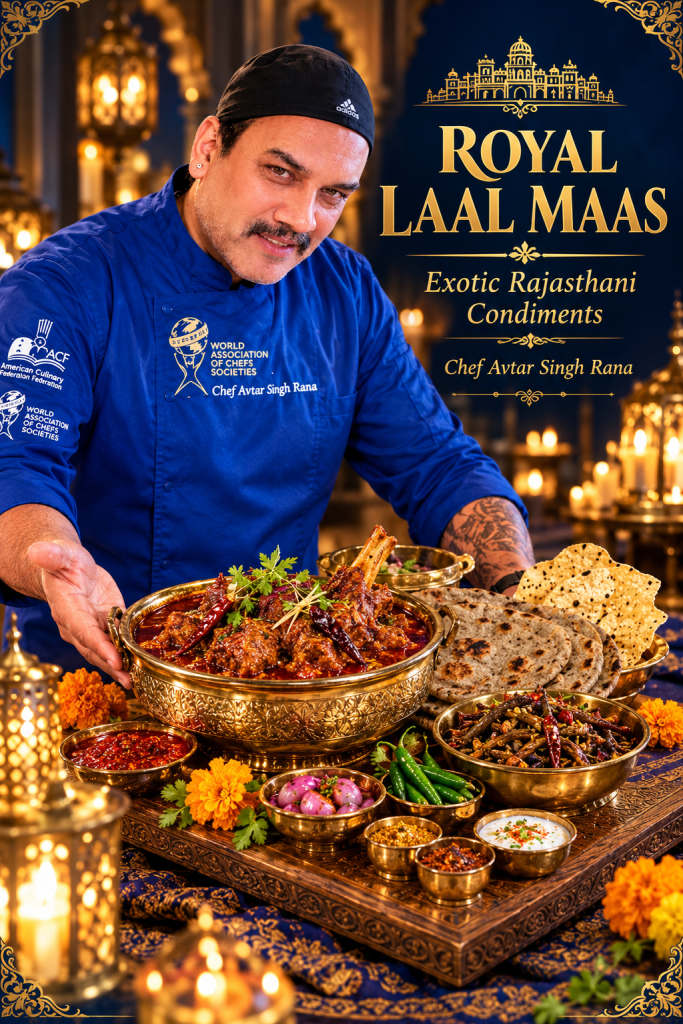
Royal Laal Maas πŸ₯°πŸ˜‹πŸ˜˜


Royal Laal Maas with Exotic Rajasthani Condiments

By Chef Avtar Singh Rana | Royal Rajasthani Cuisine

A signature Rajasthani royal preparation featuring tender mutton slow-cooked in a fiery Mathania chilli gravy, enriched with yogurt, whole spices and traditional Rajasthani aromatics.

Prep time

25 minutes

Cooking time

1.5–2 hours

Yield

4 servings

1. Ingredients

For the Laal Maas

Mutton, bone-in β€” 1 kg

Mustard oil β€” 100 ml

Thick yogurt β€” 200 g, whisked

Mathania red chillies β€” 10–12, adjusted to heat preference

Kashmiri red chilli powder β€” 1–2 tbsp

Onions β€” 300 g, finely sliced

Ginger-garlic paste β€” 3 tbsp

Garlic cloves β€” 8–10, lightly crushed

Green cardamom β€” 4 pods

Black cardamom β€” 2 pods

Cloves β€” 5

Black peppercorns β€” 8

Cinnamon β€” 1 small stick

Bay leaves β€” 2

Coriander powder β€” 2 tsp

Turmeric β€” Β½ tsp

Cumin seeds β€” 1 tsp

Salt β€” to taste

Hot water or unsalted mutton stock β€” 600–800 ml

Fresh coriander β€” for garnish

2. Method

Step 1 β€” Prepare the chilli paste

Soak dried Mathania chillies in hot water for 15–20 minutes. Blend into a smooth paste with a little soaking water. Remove seeds if you prefer less heat.

Step 2 β€” Build the base

Heat mustard oil in a heavy-bottomed handi until it just begins to smoke, then allow it to cool slightly. Add cumin, cardamom, cloves, pepper, cinnamon and bay leaves. Add onions and cook until deep golden.

Step 3 β€” Sear and spice

Add mutton and sear over medium-high heat for 8–10 minutes. Add ginger-garlic paste and crushed garlic; cook until fragrant. Mix in turmeric, coriander powder and chilli paste.

Step 4 β€” Add yogurt and slow-cook

Lower the heat. Add whisked yogurt gradually, stirring continuously to prevent curdling. Add hot stock, season with salt, cover and simmer gently for 75–100 minutes, until the mutton is tender. Stir periodically and add more stock if needed.

Step 5 β€” Finish like a royal chef

Uncover and reduce the gravy until glossy and richly coated. Adjust salt and chilli, skim excess oil if desired, and garnish with fresh coriander and a few whole dried red chillies.

3. Exotic Rajasthani condiments

Lehsun ki chutney

Blend 10 garlic cloves, 4 dried red chillies, 1 tsp cumin, salt and 1–2 tbsp water. SautΓ© briefly in 1 tbsp oil until aromatic.

Ker Sangri

Soak dried ker and sangri, boil until tender, then sautΓ© with mustard oil, cumin, asafoetida, dried red chillies, coriander and amchur.

Rajasthani mirchi achar

Toss slit chillies with fennel, mustard seeds, fenugreek, turmeric, salt, amchur and mustard oil. Rest refrigerated for a quick pickle; allow longer for deeper flavor.

Bajra roti

Knead 250 g bajra flour with warm water and salt. Pat into flatbreads, cook on a hot griddle, and finish with ghee.

4. Royal plating by Chef Avtar Singh Rana

Serve Laal Maas in a small hammered brass handi or dark ceramic bowl.

Place two hot bajra rotis or missi rotis alongside.

Arrange small condiment bowls of garlic chutney, ker sangri, chilli pickle and sliced onion with lemon.

Garnish the curry with a few whole red chillies and fresh coriander.

For a luxury presentation, use a carved wooden board, indigo textile and warm brass accents.

Chef’s tip: Authentic Laal Maas should have a deep red colour, bold chilli character, tender bone-in mutton and a glossy gravy. The goal is layered heat and aromaβ€”not simply adding more chilli powder.

Food safety: Cook mutton until tender and safely cooked throughout; for whole cuts, use a food thermometer and follow the applicable safe minimum temperature guidance. Refrigerate leftovers promptly.

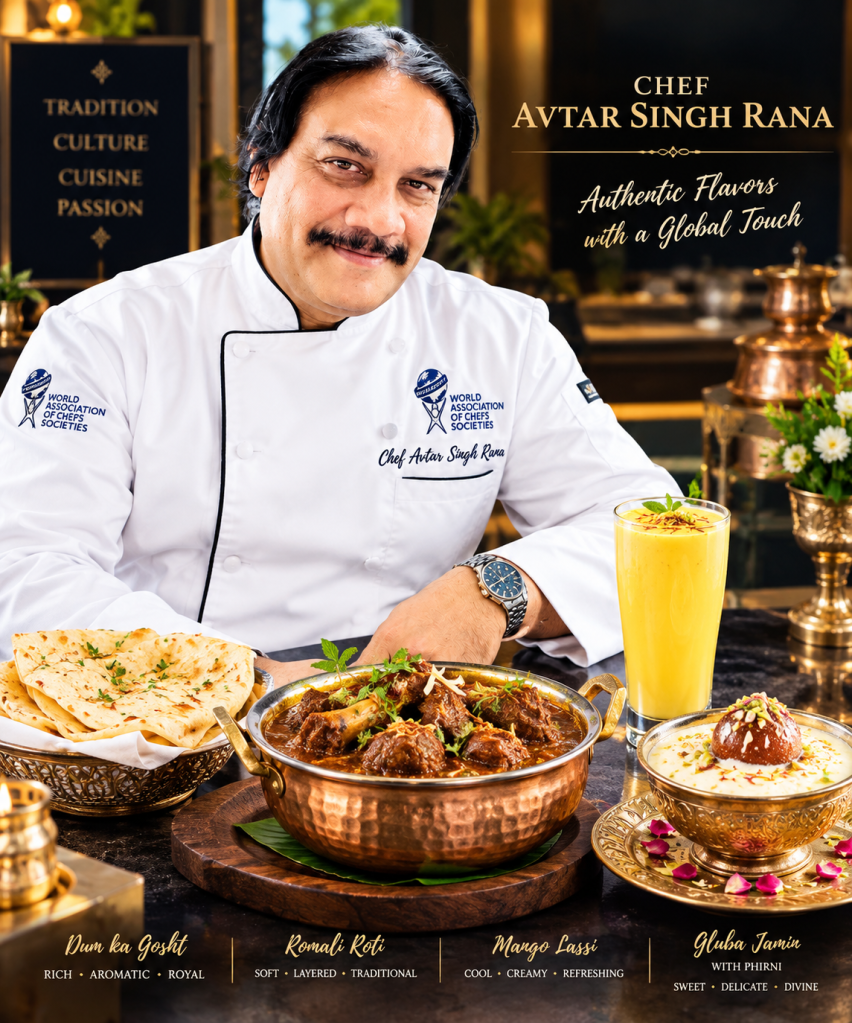
Dum Ka Gosht πŸ˜‹πŸ˜‹πŸ₯°πŸ₯°πŸ˜˜


Absolutely, Chef Avtar. Here is a professional cooking-class recipe for the complete platter: Dum Ka Gosht β€’ Romali Roti β€’ Mango Lassi β€’ Gulab Jamun with Phirni.

Chef Avtar Singh Rana β€” Royal Indian Platter

1. Dum Ka Gosht β€” 4 portions

Ingredients

  • Lamb/mutton shoulder or leg β€” 800 g, 3–4 cm pieces
  • Thick yogurt β€” 200 g
  • Ginger-garlic paste β€” 40 g
  • Kashmiri chili powder β€” 2 tsp
  • Turmeric β€” Β½ tsp
  • Coriander powder β€” 2 tsp
  • Cumin powder β€” 1 tsp
  • Garam masala β€” 1Β½ tsp
  • Fried onions β€” 100 g, crushed
  • Green cardamom β€” 4
  • Black cardamom β€” 1
  • Cinnamon β€” 1 small stick
  • Cloves β€” 4
  • Bay leaf β€” 1
  • Saffron β€” generous pinch
  • Warm milk β€” 3 tbsp
  • Ghee β€” 3 tbsp
  • Oil β€” 2 tbsp
  • Salt β€” to taste
  • Rose water β€” 1 tsp
  • Kewra water β€” Β½ tsp
  • Lamb stock/water β€” 250–350 ml

Method

  1. Marinate lamb with yogurt, ginger-garlic, chili, turmeric, coriander, cumin, salt and half the fried onions for 4–6 hours.
  2. Heat ghee and oil in a heavy-bottomed pot. Temper cardamom, cinnamon, cloves and bay leaf.
  3. Add marinated lamb and sear on medium-high heat for 8–10 minutes.
  4. Add remaining fried onions and stock. Bring to a simmer.
  5. Cover tightly with foil and lid. Cook on very low heat for 60–90 minutes, until the meat is extremely tender.
  6. Add saffron milk, garam masala, rose water and kewra during the final 5 minutes.
  7. Rest covered for 10 minutes before serving.

Chef Avtar plating:
Serve the gosht in a small copper handi with a controlled pool of glossy gravy. Finish with saffron, fried onion, micro coriander and a tiny drizzle of ghee.


2. Romali Roti

Ingredients

  • All-purpose flour β€” 250 g
  • Whole wheat flour β€” 50 g
  • Salt β€” Β½ tsp
  • Oil β€” 1 tbsp
  • Warm water β€” as required
  • Melted ghee β€” for brushing
  • Extra flour/cornstarch β€” for stretching

Method

  1. Combine flours and salt. Add oil and gradually knead with warm water into a soft, elastic dough.
  2. Knead for 8–10 minutes.
  3. Rest covered for 30–45 minutes.
  4. Divide into small balls.
  5. Roll two balls into thin discs, brush one with ghee and dust with flour. Place together and roll very thin.
  6. Stretch gently until almost translucent.
  7. Cook rapidly on an inverted hot wok/tawa, about 20–30 seconds per side.
  8. Separate the two layers and fold into the classic rumali shape.

Class tip: The dough must be soft and well-rested. That’s the key to achieving the dramatic paper-thin texture.


3. Mango Lassi

Ingredients β€” 4 glasses

  • Ripe mango pulp β€” 400 g
  • Thick yogurt β€” 400 g
  • Cold milk β€” 150 ml
  • Sugar β€” 40–60 g, depending on mango
  • Cardamom powder β€” ΒΌ tsp
  • Saffron β€” pinch
  • Rose water β€” Β½ tsp
  • Ice β€” optional

Method

Blend everything until completely smooth and creamy.

Luxury finish:
Pour into chilled glasses and garnish with saffron, chopped pistachio and a tiny mango-brunoise garnish.


4. Gulab Jamun with Saffron Phirni

Gulab Jamun

Ingredients

  • Khoya/mawa β€” 200 g
  • Milk powder β€” 50 g
  • All-purpose flour β€” 25 g
  • Baking powder β€” ΒΌ tsp
  • Ghee β€” 1 tsp
  • Milk β€” as needed
  • Oil/ghee β€” for frying

Syrup

  • Sugar β€” 400 g
  • Water β€” 400 ml
  • Green cardamom β€” 4
  • Saffron β€” pinch
  • Rose water β€” 1 tsp
  • Lemon juice β€” few drops

Method

  1. Mix khoya, milk powder, flour, baking powder and ghee gently.
  2. Add just enough milk to make a soft, smooth dough.
  3. Rest 10 minutes.
  4. Roll into small, completely smooth balls without cracks.
  5. Fry slowly at approximately 145–155Β°C / 293–311Β°F until deep golden brown.
  6. Transfer directly into warm syrup.
  7. Allow to soak for at least 2 hours.

Saffron Phirni

Ingredients

  • Basmati rice β€” 60 g
  • Full-fat milk β€” 1 liter
  • Sugar β€” 100–120 g
  • Saffron β€” generous pinch
  • Cardamom β€” Β½ tsp
  • Pistachio β€” 30 g
  • Rose water β€” Β½ tsp

Method

  1. Soak rice for 30 minutes and grind into a slightly coarse paste.
  2. Bring milk to a simmer.
  3. Add rice paste slowly while whisking continuously.
  4. Cook on low heat until thick and creamy, approximately 20–25 minutes.
  5. Add sugar, saffron and cardamom.
  6. Finish with rose water.
  7. Chill completely.

⭐ Signature plating

Use a wide black or bronze plate:

Center: saffron phirni in a shallow bowl
On top: one warm gulab jamun, split slightly to expose the center
Finish: pistachio, saffron threads, rose petals and edible flowers
Side: a small quenelle of mango gel or mango relish

Arrange the Dum Ka Gosht + Romali Roti + Mango Lassi + Gulab Jamun/Phirni as a four-course tasting experience rather than one crowded plate.

Masterclass title:

β€œRoyal Hyderabad & Awadhi Journey β€” Tradition Reimagined by Chef Avtar Singh Rana”